
Protein Molecular Weight Markers


Cayman Chemical VItelogenIncod PolycLNal 500uL
Isoprostanesprostaglandin PG-like productsof freeradicalinducedlipidperoxidation.{320 Although the isoprostanes derived from arachidonic acid are the best characterized many other polyunsaturated fatty acids can form isoprostanes.{7323} (±)5-iPF2a-VI is one of dozens of possible stereo- and regioisomeric isoprostanes which can be formed from arachidonic acid. To date the most extensively studied of these is 8-isoprostane (8-epi-PGF2a iPF2a-III).{30645011} However 8-isoprostane is a minor isoprostane constituent when compared to some of the other isomers which form in natural conditions of oxidative stress.{8367} (±)5-iPF2a-VI is an isoprostane from the unique Type VI class of isoprostanes. This class has been shown to be one of the major isoprostane products in contrast to 8-isoprostane. In addition to being produced in greater abundance than 8-isoprostane Type VI isoprostanes form internal lactones which facilitates their extraction purification fro biological samples8367940869106390

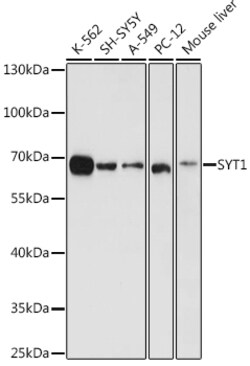
ABclonal Technology SYT1 Rabbit pAb

This gene encodes a member of the synaptotagmin protein family. The synaptotagmins are integral membrane proteins of synaptic vesicles that serve as calcium sensors in the process of vesicular trafficking and exocytosis. The encoded protein participates in triggering neurotransmitter release at the synapse in response to calcium binding. Mutations in this gene are associated with Baker-Gordon syndrome.
Sigma Aldrich Fine Chemicals Biosciences BLUeye Prestained Protein
The ready-to-use BLUeye prestained protein ladder has 12 sharp bands at 11 17 20 25 35 48 63 75 100 135 180 and 245 kDa which has more bands than commonly used markers. The BLUeye prestained protein ladder is provided in a gel loading buffer. A green and a red reference band respectively enable easier identification. The BLUeye prestained protein ladder was produced by GeneDirex Taiwan.

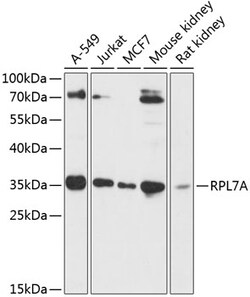
ABclonal Technology RPL7A Rabbit pAb
This gene encodes a ribosomal protein that is a component of the 60S subunit and belongs to the L7AE family of ribosomal proteins. It can interact with nuclear hormone receptors, such as the thyroid hormone receptor, and inhibit their ability to transactivate by preventing binding to DNA response elements. The gene is part of the surfeit gene cluster and is co-transcribed with small nucleolar RNA genes U24, U36a, U36b, and U36c located in its introns. The gene can rearrange with the trk proto-oncogene to form the chimeric oncogene trk-2h, which encodes an oncoprotein consisting of ribosomal protein L7a’s N terminus fused to the receptor tyrosine kinase domain of trk. Multiple processed pseudogenes of this gene are dispersed throughout the genome.
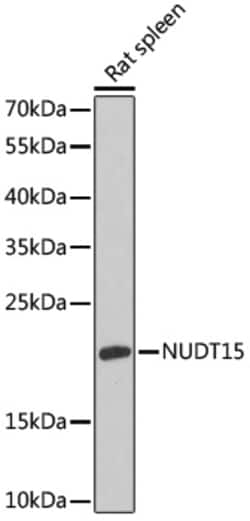
ABclonal Technology NUDT15 Rabbit pAb
This gene encodes an enzyme that belongs to the Nudix hydrolase superfamily. Members of this superfamily catalyze the hydrolysis of nucleoside diphosphates, including substrates like 8-oxo-dGTP, which are a result of oxidative damage, and can induce base mispairing during DNA replication, causing transversions. The encoded enzyme is a negative regulator of thiopurine activation and toxicity. Mutations in this gene result in poor metabolism of thiopurines, and are associated with thiopurine-induced early leukopenia. Multiple pseudogenes of this gene have been identified.
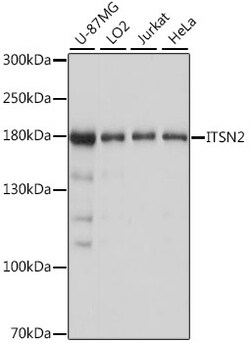
ABclonal Technology ITSN2 Rabbit pAb
This gene encodes a cytoplasmic protein which contains SH3 domains. This protein is a member of a family of proteins involved in clathrin-mediated endocytosis. Intersectin 2 is thought to regulate the formation of clathrin-coated vesicles and also may function in the induction of T cell antigen receptor (TCR) endocytosis.
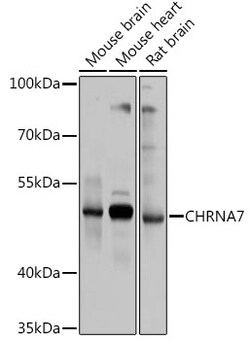
ABclonal Technology CHRNA7 Rabbit pAb
The nicotinic acetylcholine receptors (nAChRs) are ligand-gated ion channels involved in fast synaptic signaling. These receptors are typically hetero-pentamers of homologous subunits, with each subunit containing a conserved extracellular N-terminal domain, three transmembrane domains, a variable cytoplasmic loop, a fourth transmembrane domain, and a short C-terminal extracellular region. The protein encoded by this gene forms a homo-oligomeric channel that is permeable to calcium ions and is a major component of brain nicotinic receptors. This receptor, sensitive to alpha-bungarotoxin, opens upon acetylcholine binding. This gene is linked to juvenile myoclonic epilepsy and schizophrenia. A partial duplication event in this region forms a hybrid gene with the novel FAM7A gene. Alternative splicing results in multiple transcript variants.
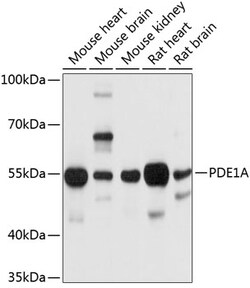
ABclonal Technology PDE1A Rabbit pAb
Cyclic nucleotide phosphodiesterases (PDEs) play a role in signal transduction by regulating intracellular cyclic nucleotide concentrations through hydrolysis of cAMP and/or cGMP to their respective nucleoside 5-prime monophosphates. Members of the PDE1 family, such as PDE1A, are Ca(2+)/calmodulin (see CALM1, MIM 114180)-dependent PDEs (CaM-PDEs) that are activated by calmodulin in the presence of Ca(2+) (Michibata et al., 2001 [PubMed 11342109], Fidock et al., 2002 [PubMed 11747989]).
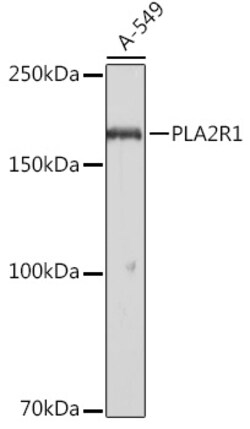
ABclonal Technology PLA2R1 Rabbit pAb
This gene represents a phospholipase A2 receptor. The encoded protein likely exists as both a transmembrane form and a soluble form. The transmembrane receptor may play a role in clearance of phospholipase A2, thereby inhibiting its action. Polymorphisms at this locus have been associated with susceptibility to idiopathic membranous nephropathy. Alternatively spliced transcript variants encoding different isoforms have been identified.
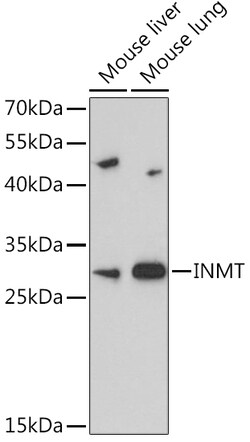
ABclonal Technology INMT Rabbit pAb
N-methylation of endogenous and xenobiotic compounds is a major method by which they are degraded. This gene encodes an enzyme that N-methylates indoles such as tryptamine. Alternative splicing results in multiple transcript variants. Read-through transcription also exists between this gene and the downstream MINDY4 (aka FAM188B) gene. In rodents and other mammals such as cetartiodactyla this gene is in the opposite orientation compared to its orientation in human and other primates and this gene appears to have been lost in carnivora and chiroptera.
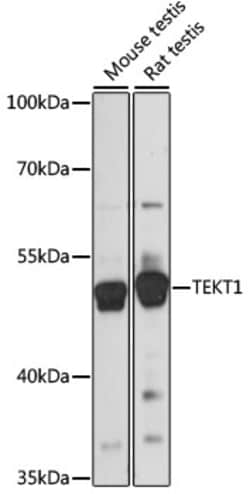
ABclonal Technology TEKT1 Rabbit pAb
This gene product belongs to the tektin family of proteins. Tektins comprise a family of filament-forming proteins that are coassembled with tubulins to form ciliary and flagellar microtubules. This gene is predominantly expressed in the testis and in mouse, tektin 1 mRNA was localized to the spermatocytes and round spermatids in the seminiferous tubules, indicating that it may play a role in spermatogenesis.
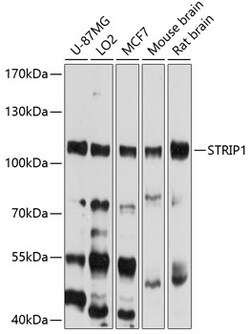
ABclonal Technology STRIP1 Rabbit pAb
This gene encodes a member of the striatin-interacting phosphatase and kinase complex, which is involved in localization of the Golgi body. The encoded protein participates in cytosketelal organization. Alternative splicing results in multiple transcript variants.
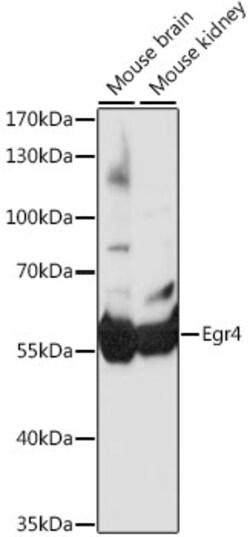
ABclonal Technology Egr4 Rabbit pAb
Predicted to enable DNA-binding transcription activator activity, RNA polymerase II-specific and RNA polymerase II cis-regulatory region sequence-specific DNA binding activity. Predicted to be involved in positive regulation of transcription by RNA polymerase II. Predicted to be located in nucleus. Is expressed in several structures, including central nervous system, genitourinary system, and tooth. Orthologous to human EGR4 (early growth response 4).
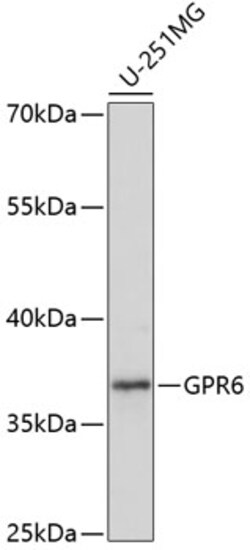
ABclonal Technology GPR6 Rabbit pAb
Predicted to enable sphingosine-1-phosphate receptor activity. Predicted to be involved in adenylate cyclase-activating G protein-coupled receptor signaling pathway and regulation of metabolic process. Predicted to act upstream of or within positive regulation of cytosolic calcium ion concentration. Predicted to be integral component of plasma membrane. Predicted to be active in cytoplasm and plasma membrane.
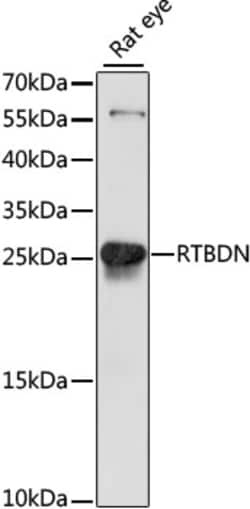
ABclonal Technology RTBDN Rabbit pAb
This gene was first identified in a study of human eye tissues. The protein encoded by this gene is preferentially expressed in the retina and may play a role in binding retinoids and other carotenoids as it shares homology with riboflavin binding proteins. Alternative splicing results in multiple transcript variants and protein isoforms.